
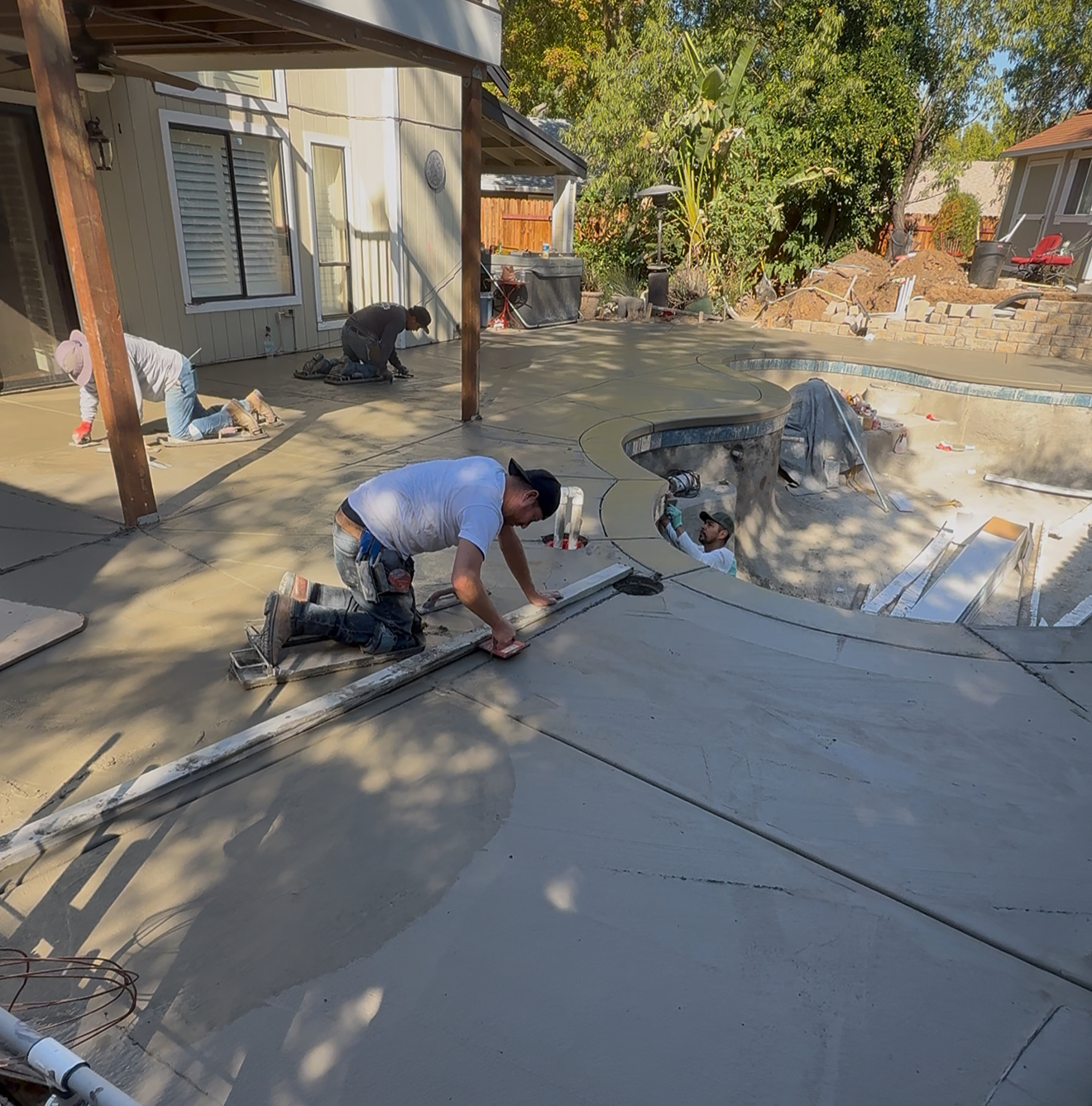
The honest answer is yes, a pool adds value to your Sacramento home. But how much value depends on the market you are in, the type of pool, and what you are actually trying to achieve. The appraised value is not the same as the lifestyle value, and most homeowners who build a pool are buying both.
Let me separate the financial question from the emotional one, because mixing them is where most of the bad pool-buyer advice comes from.
The appraisal reality
Appraisers do not give you back dollar for dollar what you spend on a pool. The 2026 industry rule of thumb is that an in-ground pool returns somewhere between 50 and 70 percent of its cost in appraised value, with a wide variance depending on the market and the pool.
For Sacramento specifically, we see the data in three tiers.
Granite Bay, El Dorado Hills, Loomis: 65 to 75 percent recovery
These foothill markets are luxury markets. Pools are expected in homes above $1.2 million. Buyers in this segment are not asking "should I buy a house with a pool" - they are asking "which house with a pool do I want." A well-built pool with a complete outdoor living setup (kitchen, fireplace, covered patio) recovers closer to 75 percent in appraised value, and often 100 percent or more at sale because inventory in this price range is competitive and turnkey.
Sacramento proper, Folsom, Roseville: 55 to 65 percent recovery
These are mainstream family markets. A pool is a real asset but not a baseline expectation. In the $700,000 to $1,000,000 range, a pool adds significant market appeal and shortens time on market, but the appraised value comes in at 55 to 65 percent of build cost. The pool is part of why someone picks your house over a comparable house without one, not the only reason.
Elk Grove, Rancho Cordova, older Carmichael and Fair Oaks tracts: 30 to 50 percent recovery
These markets are more price-sensitive. First-time buyers and move-up buyers in the $400,000 to $650,000 range often see a pool as a liability, not an asset. The cost of maintaining a pool, the safety concerns for young children, and the higher insurance premiums all work against appraised value. If you are in this market, build the pool for your family, not for the resale.
The Sacramento market context
The Sacramento region's pool density is below the California average. Los Angeles and Orange County have pools in roughly 15 to 20 percent of single-family homes. San Diego is closer to 20 percent. Sacramento is around 10 percent. The foothill communities (Granite Bay, El Dorado Hills, Folsom) push that number higher, while older central Sacramento and the southern suburbs pull it down.
What this means for value: a pool is more differentiating in Sacramento than it is in a market where every other house has one. In Granite Bay 95746, having a pool is table stakes. In Elk Grove 95624, having a pool makes your house stand out from the 9 out of 10 houses that don't.
What you spend versus what you get back
Let's run the numbers on a real scenario. A standard 400-square-foot pool with a 500-square-foot deck, mini pebble interior, variable-speed pump, and basic equipment pad, built by a licensed contractor in 2026, costs roughly $65,000 to $80,000 fully loaded (permits, design, utility runs, startup, first year of chemicals).
Appraised value, by market
- Granite Bay or El Dorado Hills home valued at $1.5M: pool adds $45,000 to $60,000 in appraised value (60 to 75 percent)
- Sacramento or Folsom home valued at $850K: pool adds $35,000 to $50,000 (55 to 65 percent)
- Elk Grove home valued at $525K: pool adds $20,000 to $35,000 (30 to 50 percent)
What the gap means
The 30 to 50 percent you do not recover in appraised value is the price of the lifestyle. You are paying for: ten summers of poolside mornings, the kids growing up swimming, the weekend BBQs, the floaties and the cannonballs. None of that shows up in the appraisal but it is real and it is yours. The question is whether the lifestyle is worth the gap to you, not whether the pool is a good investment in the abstract.
What appraisers actually evaluate
When an appraiser sees a pool, they are not guessing. They use comparable sales in the neighborhood, specifically looking at houses that sold with and without pools in the prior 6 to 12 months. They adjust the value of your home based on the difference between those comps, with adjustments for pool size, condition, and age.
Age matters
A 2-year-old pool adds more appraised value than a 12-year-old pool. The interior surface (plaster, mini pebble) is fresh, the equipment is current, the decking is in good shape. After 8 to 10 years, the pool needs resurfacing and equipment starts to age out. Appraisers discount the value accordingly.
Condition matters more than size
A 350-square-foot pool in excellent condition with updated equipment and a beautiful deck is worth more to an appraiser than a 600-square-foot pool with worn plaster and a 15-year-old pump. If you are planning to sell in the next 2 to 3 years, spend on the surface and the equipment, not on making the pool bigger.
Complete outdoor living adds more than pool alone
A pool by itself is one thing. A pool plus a covered patio, an outdoor kitchen, a fire feature, and landscaping is a different product. The outdoor living setup pushes the appraised value higher and shortens time on market significantly. If budget allows, finish the backyard when you build the pool.
The intangible value (the part that does not appraise)
Most of our customers are not building a pool as a financial move. They are building it because they want their family to swim in their backyard. They want a place where the kids spend the summer, where the weekends happen, where the in-laws come over.
That value is real. It is just not something an appraiser can put a number on.
Time on market
A Sacramento home with a well-maintained pool and outdoor living sells faster than a comparable home without one. The pool narrows the buyer pool but the buyers who care about pools really care. You trade a longer days-on-market risk for a smaller but more motivated buyer pool.
Daily life
Two months of summer in Sacramento means 60 to 80 days where the pool is the center of family life. That is real. The trade-off is that owning a pool also means 30 to 45 minutes per week of maintenance, $1,200 to $1,800 per year in chemicals and electricity, and the occasional repair call. The families who love their pools do not regret the maintenance. The families who built the pool for resale often do.
Health and family time
People with home pools swim more. The families we work with report more outside time, more family time, more social time. None of that shows up in the resale math but it shows up in how the family uses the backyard for the next 15 to 25 years.
What hurts pool value at resale
A few things will cost you more at resale than they save you at build. Avoid these.
Cheap finishes
Standard plaster is the entry-level interior finish and it shows. Buyers can tell the difference between a 2-year-old plaster pool and a 2-year-old mini pebble pool. The $3,000 to $5,000 upgrade to mini pebble pays for itself many times over at resale.
Skipping the deck
A pool with a tiny deck or no deck looks unfinished. Appraisers discount it and buyers do not want it. A 400-square-foot pool should have at least 400 to 500 square feet of usable deck around it.
Poor equipment
Single-speed pumps, undersized filters, no automation. If a buyer or their inspector sees outdated equipment, they will discount the value by the cost of replacement. Spend on the variable-speed pump, the proper-size filter, and basic automation. It is part of the value now and at resale.
Neglect
The single biggest resale hit on a pool is a pool that looks neglected. Stained plaster, cloudy water, cracked deck, equipment that sounds rough. A pool in rough shape actually detracts from value because buyers calculate the cost of bringing it back to standard. Maintain the pool or do not build it.
Is a pool the right move for you?
Here is the framework I use when homeowners ask this question on the first call.
- If you are in a luxury market (Granite Bay, El Dorado Hills, Loomis) and you plan to stay 5+ years, build the pool. The appraisal is solid, the lifestyle is strong, and the resale math works.
- If you are in a mainstream market (Sacramento, Folsom, Roseville) and you have young kids, build the pool. The lifestyle return is real and the appraisal is fair.
- If you are in a price-sensitive market (Elk Grove, Rancho Cordova) and your primary goal is resale, do not build a pool. The math does not work and the buyer pool is smaller.
- If you plan to move in 3 years or less, reconsider. A 3-year-old pool in a 5-year-old house does not have the same resale value as a 3-year-old pool in a 15-year-old house.
- If you are building the pool because you want your family to swim in your backyard, build the pool. The cost is the cost. The math is what it is. The summers are what they are.
For a real cost number on what you are considering, our Sacramento pool cost guide breaks down the 2026 numbers line by line. And if you want to see what the build actually looks like, our project gallery has photos from the past two years of work across Sacramento, Folsom, Roseville, and Granite Bay. Or just start a free estimate and we will come back with a real number for your property within a business day.