
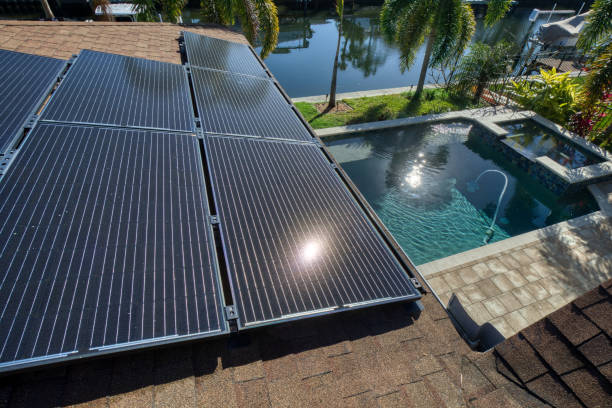
Pool Solar Heating Systems
Sacramento gets 300+ sunny days a year. Put them to work. Solar pool heating extends your swim season from March through November — with zero gas costs and minimal upkeep.
Sacramento Is Built for Pool Solar
The Sacramento region enjoys more than 300 sunny days annually — one of the highest solar resource ratings in the continental United States. While residents already leverage this for rooftop photovoltaic panels and passive solar home design, many pool owners are still paying hundreds or thousands of dollars per year in natural gas to heat their pools when the sun could do the same job for free.
Solar pool heating is one of the most cost-effective solar investments available for Sacramento homeowners. Unlike solar photovoltaic systems that generate electricity (requiring inverters, batteries, and grid interconnection agreements), solar pool heating systems are mechanically simple: your existing pool pump circulates water through roof-mounted collectors that absorb solar heat, returning the warmed water to the pool. No complex electronics, no utility interconnection, and the return on investment typically occurs within 2 to 4 years — after which the heat is genuinely free.
How Pool Solar Heating Works
A solar pool heating system integrates directly with your existing pool circulation:
- Collection — Solar collectors (panels) are mounted on a south, southeast, or southwest-facing roof or ground rack. Pool water is pumped through thousands of small channels within the collectors, where it absorbs solar radiation and heats up.
- Circulation — Your existing variable-speed pump circulates pool water through the collectors during daylight hours. A diverter valve controls flow — when collectors are warmer than the pool, water is routed through; when not, it bypasses.
- Control — A differential controller continuously monitors collector and pool temperature, automatically activating solar heating when conditions are favorable and bypassing when they're not.
- Return — Heated water returns to the pool, raising water temperature gradually over days and maintaining comfortable temperature through the extended solar season.
The system works passively throughout the day without any manual intervention. On a clear Sacramento summer day, a properly sized solar system can raise pool temperature by 1–2°F per day until reaching equilibrium with your target temperature setting.
Sacramento's Solar Advantage
Not every city is as well-suited to solar pool heating as Sacramento. Several factors make our region exceptional for this technology:
- 300+ sunny days per year — Sacramento consistently ranks among California's sunniest major cities, with clear sky conditions for the majority of the swimming season.
- Long spring and fall shoulder seasons — Sacramento's mild springs and warm falls extend the potential swim season well beyond summer, but pool water temperatures without heating can be too cool for comfortable swimming in March, April, October, and November. Solar bridges this gap perfectly.
- Low humidity — Sacramento's dry climate means less cloud cover than coastal California and a longer daily window of direct solar radiation.
- High summer temperatures — Sacramento's intense summer heat means collectors operate at peak efficiency during the core of the swim season.
- Ideal roof orientations — Sacramento's residential neighborhoods feature a mix of roof orientations, with many homes offering excellent south or west-facing roof areas for collector placement.
Extended Swim Season: March Through November
Without heating, Sacramento pool water is typically comfortable for swimming from approximately late May through early September — a window of about 15 weeks. With a properly sized solar heating system, that window extends to approximately March through November — roughly 36 weeks, more than doubling your usable swim season.
This isn't a minor improvement in pool enjoyment; it's a fundamental change in how your pool fits into your family's life. Spring and fall are two of Sacramento's most beautiful seasons — warm, sunny, and low humidity. Being able to swim comfortably during those periods is a significant quality-of-life upgrade that gas heating can also provide, but at a cost that adds up quickly.
Energy Savings & Return on Investment
A gas pool heater running to maintain 80°F water temperature in Sacramento's spring and fall conditions can cost $200–$600 per month in natural gas, depending on pool size, heater efficiency, and local gas rates. Over an extended season, annual gas heating costs can exceed $1,500–$3,000 for pools heated through the shoulder seasons.
A solar pool heating system installation typically costs $3,000–$7,000 depending on pool size, collector type, and installation complexity. At that investment level, the system pays for itself in 2 to 4 years through eliminated gas costs — and then continues operating essentially free for 15 to 25 years, which is the typical service life of quality solar collectors.
Solar heating also pairs naturally with pool solar photovoltaic systems (for powering your pool pump and other equipment), creating a fully solar-powered pool environment that costs nearly nothing to operate year-round.
Solar Collector Types
Unglazed Polymer Collectors
The standard choice for residential pool solar in Sacramento's climate. These black polypropylene collectors are unglazed (no glass cover) — which makes them extremely durable, lightweight, and cost-effective. In Sacramento's sunny, low-humidity climate, unglazed collectors perform exceptionally well from spring through fall. They are the most common collector type for pool heating applications and offer the best value for most Sacramento homeowners.
Glazed Flat-Plate Collectors
For year-round heating ambitions or heating pools in partially shaded or cooler installations, glazed flat-plate collectors provide higher efficiency through their glass covers and insulated backing, which reduce heat loss. They cost more than unglazed collectors and are heavier, but they extend effective heating into cooler conditions and work in higher-wind environments where unglazed collectors lose heat more readily.
System Sizing
Proper sizing is essential for solar pool heating performance. An undersized system runs continuously but never reaches target temperature; an oversized system wastes investment. We size systems based on your pool's surface area, your target swimming temperature, your local climate data, available collector mounting area, and shading analysis. As a general guideline, solar collector area should equal 50–100% of the pool's surface area for Sacramento's climate — with larger ratios needed for heated shoulder-season use.
Integration with Existing Equipment
Solar heating systems work alongside your existing pool equipment. If you have an existing gas heater, it remains in place as a backup for cloudy periods or to boost temperature quickly before events. The solar system handles the baseline heating load; gas handles supplemental needs. This hybrid approach gives you maximum flexibility with minimized gas use. We integrate all systems through your Pentair automation controller for simple, unified management.
Environmental Benefits
Beyond the economics, solar pool heating eliminates the natural gas combustion associated with conventional pool heating. A gas pool heater burning 150,000–400,000 BTU/hour generates significant carbon emissions during operation. Solar heating replaces that combustion with clean, renewable solar energy — consistent with California's broader clean energy goals and Sacramento's own sustainability commitments.
Benefits of Solar Pool Heating
Sacramento's climate makes solar pool heating one of the smartest investments a pool owner can make.
Energy Savings
Eliminate $1,500–$3,000+ in annual gas heating costs. Solar energy is free once the system is installed — your operational costs drop to near zero for pool heating.
Extended Swim Season
Swim comfortably from March through November in Sacramento — more than doubling the typical unheated swim window and letting you enjoy spring and fall's best weather in the water.
Eco-Friendly
Replace natural gas combustion with clean, renewable solar energy. Reduce your household's carbon footprint while enjoying a more comfortable pool — a win on every dimension.
Low upkeep
Solar heating systems have no moving parts in the collectors and require minimal upkeep — typically just an annual inspection and occasional collector cleaning. Most systems operate 15–25 years trouble-free.
Professional Sizing
Every system is individually sized based on your pool's surface area, your target temperature, available roof area, and local shading conditions — ensuring maximum performance and value.
Warranty Coverage
We install quality solar heating systems backed by manufacturer warranties on collectors and components, plus our own workmanship warranty on installation. Your investment is protected.
Your Solar Installation Process
From assessment to your first solar-heated swim — here's exactly what to expect.
Solar Assessment
We evaluate your roof's orientation, pitch, and available area; assess shading from trees or structures; measure your pool's surface area; and review your heating goals to determine system feasibility and sizing requirements.
System Design
We design your solar heating system — specifying collector type and quantity, mounting location, plumbing route from roof to equipment pad, diverter valve placement, and control system configuration.
Installation
Collectors are mounted on your roof with appropriate flashing and sealing. Supply and return plumbing is run from the collectors to your equipment pad. The diverter valve and differential controller are installed and connected.
Testing & Commissioning
We pressure-test all plumbing, verify diverter valve operation, program the differential controller, and run the system through a full operating cycle. We walk you through system operation before we leave.
Pool Solar FAQs
Ready to Swim More, Spend Less?
Get a free solar assessment for your Sacramento pool. We'll evaluate your roof, calculate your potential savings, and design a system that pays for itself — then keeps delivering free heat for decades.
Get Free Solar Assessment Call (916) 926-8884